The ErgOHListic Method®

Most approaches against musculoskeletal disorders (MSDs) attempt to solve one single issue at a time: either the work environment (ergonomics), physical re-education (posturology), or pain, but rarely all three together.

The result: one-off solutions that relapse as soon as the context changes.

The ErgOHListic Method® provides a comprehensive framework adaptable to every profession to protect health and maintain performance every day

see our services

Overcoming Traditional Limitations

Two approaches coexist in the fight against work-related pain, each with its own limitations:

  • Ergonomics focuses on adapting the work (tasks, workstation, environment). This is essential, but often insufficient. A perfectly adjusted workstation does not protect an employee who adopts awkward postures out of habit, due to stress or a lack of awareness of their own body. Furthermore, technical or organisational solutions are costly, slow to roll out and sometimes impossible to implement immediately. We cannot change everything straight away.
  • Traditional posturology (such as the Mensendieck method) has revolutionised body awareness by teaching us how to conserve our energy in everyday activities. But focusing solely on the “correct execution” of movement can sometimes lead to mental and physical rigidity. In a fast-paced, imperfect and ever-changing world of work, striving for the perfect posture is a source of additional stress.

These two approaches therefore often lack practical applicability, tend to fuel conflicts between employees and employers, and lack responsiveness:

  • The ergonomist says: “Change your chair.” (But you spend two hours in a meeting without an adjustable chair).
  • The posturologist says: “Stand up straight.” (But you have to lift a heavy load in a cramped space).

The result: the employee waits in the hope that things will get better later, which fuels pain, a sense of victimisation and fatalism.

There is an urgent need for a paradigm shift: if everyone understands how the body works, everyone will be able to play their part in completing the “preventative and curative puzzle”, independently, in any situation.

This is where the ErgOHListic Method® comes in, based on ergonomics, engineering and Mensendieck therapy.

How it works

The four elements of the ErgOHListic Method® are all based on three absolute rules, which are applied in conjunction during all our sessions.

  • No vague or even misleading instructions (“stand up straight”), but only anatomical phenomena that everyone can understand, observe, and apply to all occupations.
  • Priority is given to reducing the strain on the body, whether through equipment, organisation or behaviour. This is done using common sense, distinguishing between short-term solutions and the long-term ideal.
  • Relentless structuring, both in clinical and ergonomic analysis and in teaching and the formulation of the action plan: ‘what is well conceived is clearly expressed’.

Result: A pragmatic approach to prevention that depends neither on an unlimited budget for new equipment nor on a perfect posture that is impossible to maintain. Everyone plays their part, both at work and outside work, and in this way a culture of shared responsibility is fostered.

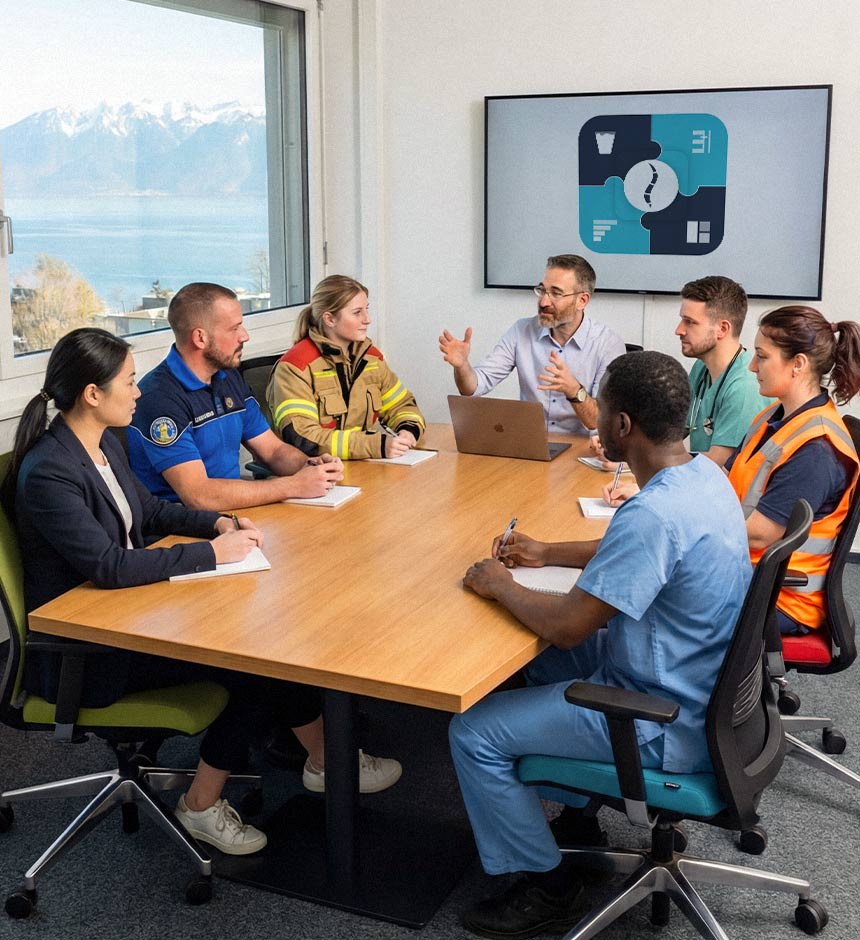
The 4 pieces of the ErgOHListic puzzle

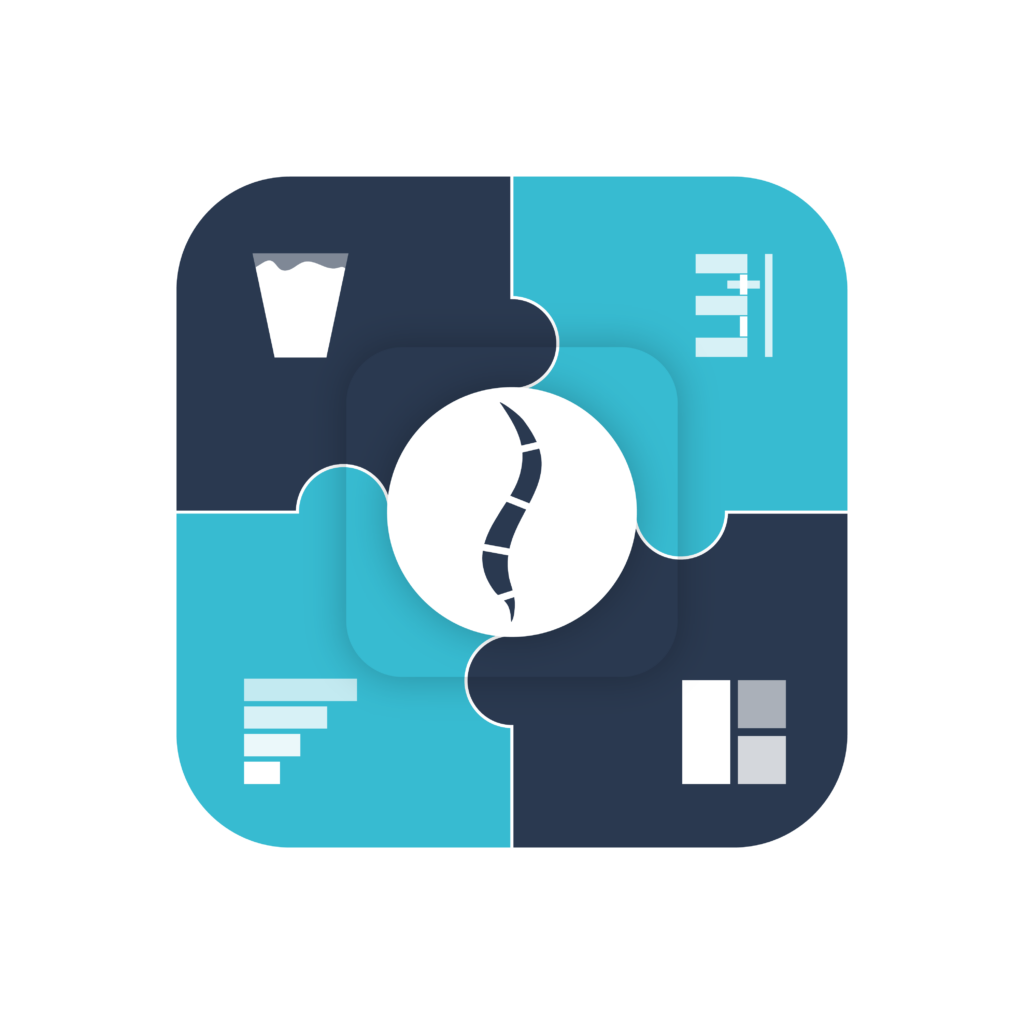
Each piece of the logo corresponds to a concrete tool within the method, split into two families: diagnostic tools, which help understand a situation, and intervention tools, which help act on it.

Diagnostic tools

  • The Cumulative Model: musculoskeletal disorders develop progressively, like a glass filling up drop by drop. Understanding this build-up makes it possible to act before the glass overflows.
  • The 3+1 Rules of Posture: the method’s biomechanical reading grid — three universal rules, applicable to any profession, completed by a fourth to finalize the analysis of the body joint by joint.

Intervention tools

  • The Action Plan: once the diagnosis is set, it structures the search for concrete solutions, by eliminating the root causes of excess load on the body.
  • The 3-Box System: a coaching tool to prioritize actions by frequency — from daily habits to more advanced symptom management when needed.

Result: a method that isn’t limited to isolated advice, but connects diagnosis and action within a coherent framework, from everyday gestures to the most complex situations.

Outcomes

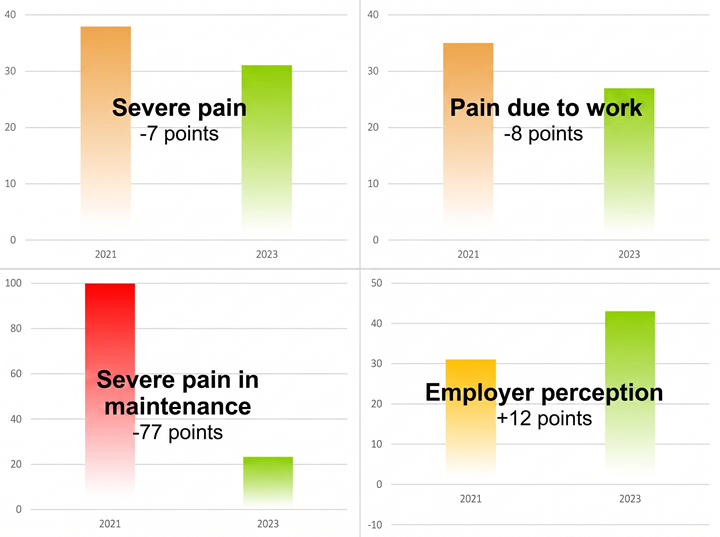
Outcomes after 2 years (10 intervention days)

The feedback we receive from our clients – both businesses and individuals – is consistent:

  • A lasting reduction in pain associated with musculoskeletal disorders, not just temporary relief.
  • Complete independence: you no longer need to rely on a therapist to manage your posture on a day-to-day basis.
  • A cost-effective approach: fewer repeat sessions, less absences from work, fewer relapses.
  • A method tailored to your profession, not a one-size-fits-all approach — from archaeologists to office managers.

To go further

Let's talk

If you would like to know more or get a quote tailored to your needs, we are here to talk.

Request a meeting